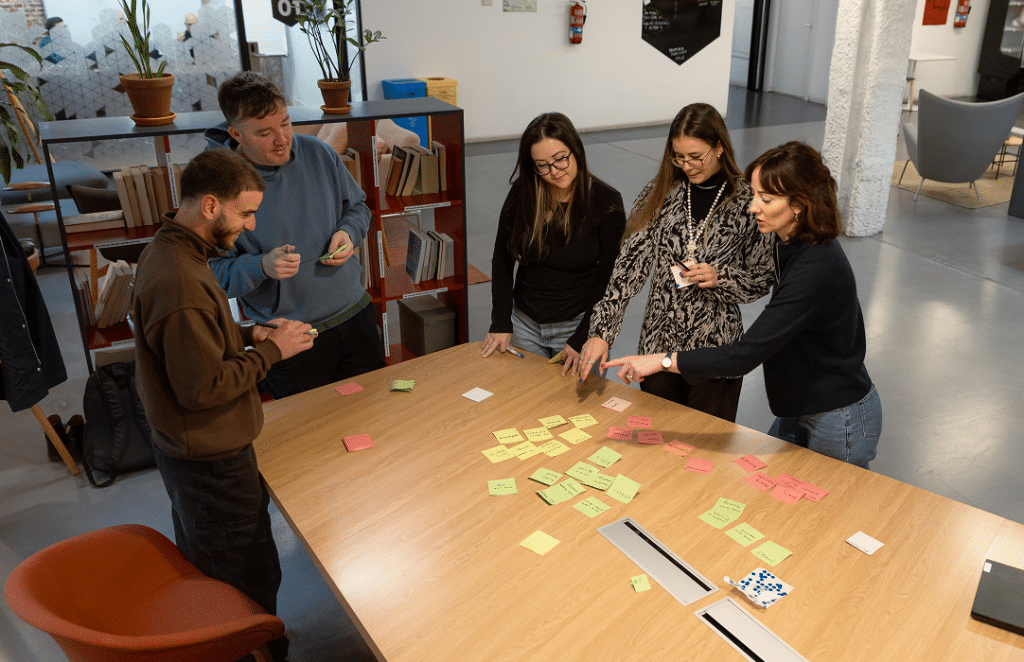
Ah, the humble retrospective!
Originally introduced as part of the Agile framework by software developers about 50 years ago, its purpose is simple: bring the team together to figure out what went well (and what didn’t), and identify clear improvements for the next sprint.
It is such a straightforward concept that in this age of AI bots managing our lives, I risk coming across as a bit “old school.” But I want to revisit it because I truly believe it’s the most under-rated tool a team can use.
I usually recommend using retros as a standard sprint ceremony, but they are equally powerful ad-hoc when a specific challenge needs unpicking. I often introduce them early when onboarding new clients for two reasons:
- Team Pulse: It helps me get a broad overview of where the team is at on the core issues.
- Change Management: It’s much easier to implement change later on when the team are the ones to identify what needs to change in the first place.
In the field
With a recent client, my onboarding 1:1s revealed that the CEO had accidentally become a bottleneck. This issue naturally came up in the retro and we were able to implement some tactical changes to relieve the pressure. It was a low-key, matter-of-fact approach with no finger-pointing or blaming, just an objective look at what was stopping the team from succeeding. The CEO later told me it was the best workshop of our entire engagement. They knew they had become a blocker, but hadn’t realised the extent of the impact on the team’s momentum.
Why bother with a retrospective?
- It identifies root causes: We all make mistakes, but without pausing to identify a fix and holding the team accountable, those same mistakes just keep happening.
- It boosts morale: It’s a dedicated chance to recognise the team’s efforts. When people feel seen, satisfaction goes up.
- It provides nuance: Sometimes a launch feels like a disaster, but a retro reveals things that actually went well. Conversely, you might nail a launch while the team dynamics are silently falling apart. The retro brings the truth to the surface.
- It builds psychological safety: Being able to admit mistakes without fear of retribution creates psychological safety, which is the #1 predictor of high-performing teams (shout out to Google’s Project Aristotle).
- It encourages course correction: Success in product isn’t just about iterating on the features; it’s about iterating on how we work together.
The Traps to Avoid
Even though it’s a simple tool, there are a few common pitfalls:
- The “Safety” Gap: If your culture doesn’t empower teams to self-manage, a retro becomes a box-ticking exercise with zero ROI.
- The HIPPO Effect: If the “Highest Paid Person’s Opinion” or the loudest voice dominates, you lose the quiet brilliance of the rest of the team.
- The “Fine” Filter: If no one can think of anything that went wrong, they are either being dishonest or they’re afraid of retribution.
- Poor Facilitation: Without someone to guide the themes and push for ownership of action items, it just becomes an empty chatter session.
My Pro-Tips for a Successful Retro
As a facilitator, your job is to set the tone: this is about the greater good, not individual performance. Every person in that room is an equal.
- Clarify Intent: Remind everyone at the start: this isn’t about finger-pointing. It’s a constructive exercise for an empowered team.
- Enforce Equal Airtime: Use an old-school kitchen timer (and put the phones away!). 10 minutes for a section, 2 minutes for writing, 2 minutes per person for sharing.
- The “Parking Lot”: If a topic is too “hot” or complex to solve in the moment, put it in the parking lot for a separate follow-up.
- Go Neutral: If possible, bring in a neutral facilitator who wasn’t involved in the project to keep things objective.
Retrospectives in an AI World
I love meeting in person, but I’ve grown to dread the manual work of redacting notes and assigning actions afterwards. AI can help here, but remember: retros are “intimate” spaces. Some team members might not want every word recorded. Always offer an “off-the-record” clause where the recorder gets turned off for a few minutes.
How to blend the two:
- Miro + Laptops: Meet in person, but use a virtual whiteboard like Miro. Their AI grouping features are a great “first draft” for finding themes in your post-its.
- Transcription as a Coach: Use a tool like an Owl or a voice memo app to get a transcript. You can then ask AI to identify “tensions” or patterns in the team’s sentiment over time that you might have missed.
- Automated Next Steps: Use AI to draft the “Definition of Done” for your action items. It’s much faster to edit a draft than to stare at a blank screen.
It’s not just for Product…
Retrospectives work everywhere—even at home! My husband and I regularly have “mini-retros” after big events like family visits or holidays. It’s a great way to pause, share thoughts, and figure out how to make things work better for the “family picture” next time.
Please share below how you are using retrospectives in your team!